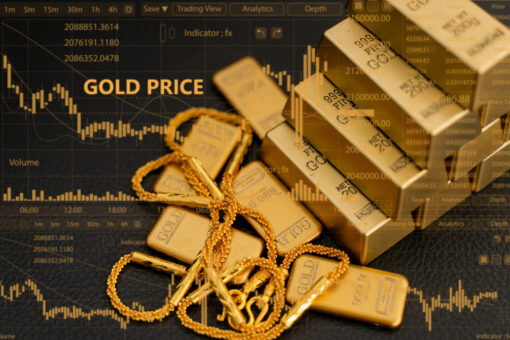
The gold spot price is the current market price for one troy ounce of pure gold. It is the starting point for almost every cash offer on gold jewelry. When the spot price goes up, your gold is worth more, and when it drops, offers drop with it. At GNJ Pawn Big, we combine the day’s market price with the weight and purity of your items to give Antelope Valley sellers a fair offer that is easy to understand.
What Is the Gold Spot Price?
The spot price is what pure gold is trading for right now on global commodities markets. It is quoted per troy ounce, which equals about 31.1 grams and is slightly heavier than a standard ounce. Gold trades nearly around the clock in markets like London, New York, and Hong Kong, so the price moves throughout the day based on factors such as:
- Interest rates and Federal Reserve policy
- The strength or weakness of the U.S. dollar
- Inflation reports and other economic news
- Global demand from investors, central banks, and jewelry manufacturers
Because these forces are worldwide, the spot price in Palmdale or Lancaster is the same as it is in New York or London.
How Does the Spot Price Turn Into a Cash Offer?
Most jewelry is not pure gold, so a buyer first works out its melt value. Melt value is the worth of the actual gold contained in your piece. The calculation uses three numbers:
- The current spot price
- The weight of the gold
- The purity, or the percentage of the metal that is pure gold
For example, 14K gold is about 58.3% pure, and 18K gold is 75% pure. A 10-gram 14K chain contains roughly 5.83 grams of pure gold. Multiply that by the current per-gram spot price and you have the chain’s melt value. Gemstones, steel springs, and other non-gold parts are not counted in the gold weight. Diamonds and other stones are evaluated separately.
Why Is a Cash Offer Lower Than the Full Spot Price?
Buyers usually pay a percentage of melt value rather than the full amount. The difference covers refining, testing, and the cost of turning used jewelry back into pure, usable metal. A trustworthy buyer will gladly walk you through how your offer was calculated. That transparency matters most with scrap gold, broken chains, and single earrings, which are valued almost entirely by their metal content.
Should You Time Your Sale Around the Gold Market?
Gold prices change every day, but even professional traders struggle to predict short-term moves. Instead of trying to sell at the perfect moment, keep these tips in mind:
- Check the spot price on the day you plan to sell.
- Look at the trend over several months, not just a single day.
- If you need cash now, don’t wait indefinitely for a peak that may not come.
- When comparing buyers, ask how each offer was calculated, not just what the total is.
Does the Spot Price Matter for Silver and Platinum Too?
Yes. Silver and platinum each have their own spot price that moves independently of gold. Sterling silver is 92.5% pure silver, and most platinum jewelry is 90% to 95% pure platinum. The same weight-and-purity math applies, so whether you bring in silver flatware or a platinum ring, today’s market price directly shapes your payout.
Get a Fair, Market-Based Offer in Palmdale
Knowing how spot prices work helps you sell with confidence and recognize a fair offer when you see one. GNJ Pawn Big bases every appraisal on current market prices, so Antelope Valley sellers can expect an honest number backed by clear math. Bring your gold, silver, or platinum jewelry to our Palmdale store and walk out with cash the same day. Call (661) 224-1999 today to learn more or to ask about current pricing before you visit.