Your dental appliance probably contains less gold that you think, but it could still be worth something
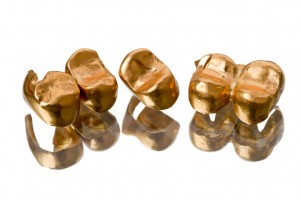 Gold dental work is a tradition dating back thousands of years. Many African cultures as well as South American cultures such as the Inca adorned their teeth with gold or inlays made from precious stones like jade, mainly as a status symbol. Today gold dental work is once again popular in some circles as a fashion statement or status symbol. If you have a gold dental appliance, it’s probably worth more in your mouth than on a gold buyer’s scale, simply because of the high cost of getting the necessary dental work to remove and replace it. But if your gold dental appliance has broken, you might as well try to sell it to a company such as Gems & Jewelry Inc. Here are the two crucial factors that will determine what your dental gold is worth.
Gold Content
Obviously the size and weight of your gold dental appliance will determine its value, because gold is sold by weight. Your average gold crown contains about 1/10th of an ounce of gold. Pure gold is never used for dental appliances because it is simply too soft. Instead, gold teeth and crowns are typically made from some type of gold alloy, which may include “noble” metals like gold, silver, platinum, and palladium, plus some “base” metals like copper or tin. The American Dental Association does regulate the types of gold alloys used for dental work in this country, and a gold crown can only be advertised as “high noble” if it contains at least 60 percent noble metals, at least 40 percent of which must be gold. If you don’t recall what your gold dental appliance is made from, it will have to be sent out for testing to determine its gold content.
Market Value
The other important factor to consider when trying to get the best price for your dental gold—or any type of gold for that matter—is the current market value of gold. If you can, keep an eye on the price of gold for a while before attempting to sell your dental gold so that you can have the best chance of selling before prices peak. When calculating how much you might be able to get for your dental gold, remember that a gold dealer will probably pay you between 60 and 80 percent of the market price for your gold. Be sure you sell to a reputable local business like Gems & Jewelry Inc. that will give you a fair cash payment for your gold on the upper side of this range.