
Color, clarity, cut and carat weight determine the value of a diamond
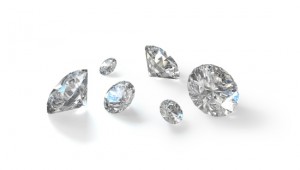 You may have noticed the price of diamond jewelry steadily increasing over the past few years. In part this is due to the rising prices of gold and other precious metals commonly used in diamond jewelry. However, diamond prices have also been increasing. According to data collected by Pricescope.com, the retail prices of high-quality 1 carat diamonds have increased by about 20 percent since 2010. The price of your diamond may not have increased that much. It all depends on the quality of the diamond, which can be determined using the 4 C’s of diamond valuation as established by the Gemological Institute of America.
Before you decide to sell or pawn, be sure you know how your diamond ranks on the 4 C’s of diamond valuation:
Color
Diamonds are ranked on a scale of D to Z, with D being colorless and Z being yellow or brown. The more chemically pure a diamond is, the clearer the gem will be. The most valuable diamonds are colorless, but near colorless diamonds ranked G, H, or I are very common in retail jewelry. The difference is so slight that it can’t be readily seen by the naked eye.
Clarity
Sometimes diamonds appear “dark” not because of their color but because of the number of inclusions or flaws present in the stone. Most inclusions are bits of other minerals that became trapped in the diamond during crystallization. The GIA ranks diamonds for clarity on a scale ranging from internally flawless to visibly flawed. Naturally the more flaws on inclusions there are, the less the diamond will be worth, especially if the flaws have not been hidden with clever cutting or setting of the diamond.
Cut
The cut of a diamond refers to both its shape and its proportions. Certain shapes like round, princess, oval, marquis, etc. may be more or less popular and valuable as tastes change, but a well-proportioned diamond will always be desirable. The proportion of the cut refers to the way that the diamond has been shaped for ideal light performance. If the stone is too deep, light will refract out the bottom, and if it’s too shallow, light will pass through, but stones with “excellent depth” will trap light and cause it to refract back out the top of the stone for maximum sparkle or fire. The GIA ranks cut from ideal to poor.
Carat Weight
Carats are used to measure the weight of a diamond, not its size. The heavier the diamond is, the more valuable it is, assuming of course that all other factors are equal. High-carat diamonds of excellent quality are quite rare, which further increases their value.
How Does Your Diamond Measure Up?
The easiest way to know how your diamonds ranks on the 4 C’s is to check your diamond certificate. Most diamonds sold in the US will come with a certificate from the GIA or other grading laboratory. If you don’t have a certificate, you will need to have your diamond appraised.